Living in Punta Cana: what daily life looks like from Green Village
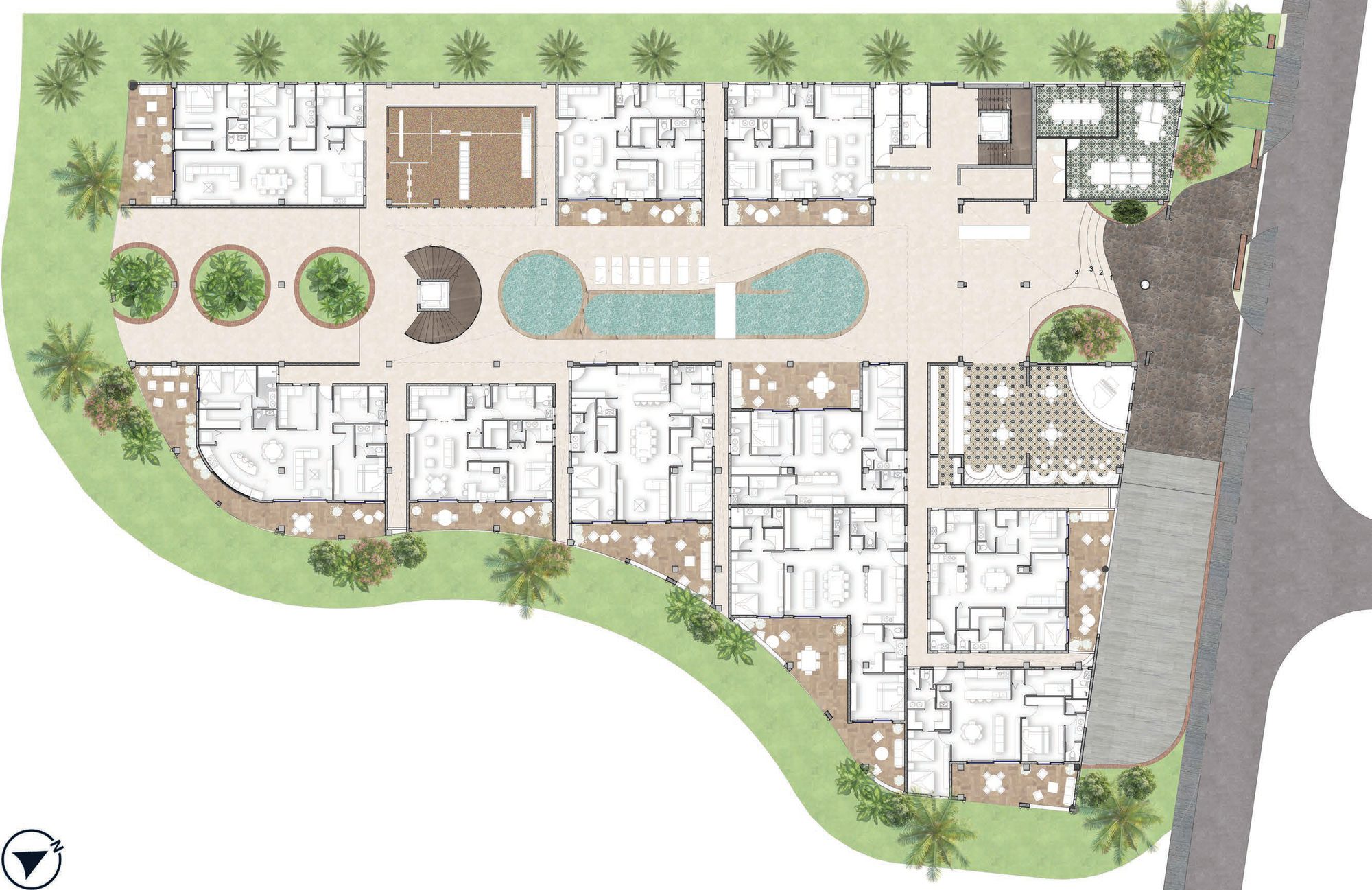
"Punta Cana" is used for a very large stretch of the east coast, and living there means something different in a resort strip, in a town centre or inside a gated community. This page describes one of those settings from the inside: Belara, a building of 59 residences on 5 levels in Green Village, a planned residential community within Cap Cana, which opens directly onto the community's central park. Delivery is planned for Q4 2029, so what follows is how the setting is designed to work, and the practicalities any newcomer to the area meets.
Which Punta Cana you would actually live in
Ask what it is like to live in Punta Cana and the honest answer starts with a question back: which part? The name covers hotel zones, busy commercial districts and private communities many miles apart. Belara is in the last kind. It stands in Green Village, a planned residential community inside Cap Cana, and its central atrium opens directly onto the community's central park, which is also visible from many of the terraces.
Green Village is designed around everyday errands rather than holidays: a commercial plaza with restaurants, a market and a beauty salon is steps away, and the community organises around the park, with walking, yoga and sport in the open air. The beach is a short drive rather than a walk: Juanillo is about a 12-minute drive, and the airport a 20-minute drive, both measured from the developer's own map pin without traffic.
A weekday from the building
Belara stacks its shared spaces so that an ordinary day can happen without leaving the building. On level 1 there is a coworking space with meeting rooms, which matters to anyone who keeps a job elsewhere, as well as the lobby's piano bar, the lap pool, the jacuzzi and a kids club. Level 3 holds the gym and spa, and level 5 the rooftop, with a running and yoga track, a barbecue area and a sky garden; from the gym and the rooftop track the views reach the Las Iguanas golf course and the Caribbean Sea.
Then the park, one door away. For a household that lives here rather than visits, that is the feature that changes the day most: a place to walk, run or let children play that is not a hotel's pool deck. Getting in and out is simple too, with 99 underground parking spaces, 3 more for golf carts and two elevators, one of them panoramic over the atrium.
Getting around as a newcomer
Most people who live here drive. Dominican road rules sit under Ley 63-17, administered by INTRANT, and INTRANT is reported to let visitors drive on the licence issued by their own country for around 90 days. That allowance is administrative practice rather than a clause anyone has located in the law, so confirm it before relying on it, and plan for a Dominican licence if you stay. Carrying an International Driving Permit as well is generally advised rather than required, and it helps most when your own licence is in a language other than Spanish.
For days without a car, app-based ride-hailing operates in the Punta Cana area, though its availability has changed more than once over the years and is worth checking at the hour you need it. Inside Cap Cana, the golf-cart spaces at Belara say something about how short many local trips are.
Everyday money
The residences are priced in US dollars, from US$318,701, but daily life runs in Dominican pesos, and card or cash prices at the supermarket and the pharmacy are usually quoted in them. The detail that surprises newcomers is the restaurant bill. Dominican restaurants add a mandatory 10% service charge, the propina legal, as a line of its own, alongside 18% ITBIS. It is widely reported not to reach the individual server reliably, which is why leaving something extra in person is customary.
Furnishing is a one-time expense to plan early: Belara is delivered with a stove, oven, refrigerator, washer, dryer and VRF air conditioning, but without furniture. Everything else in a household budget, from utilities to insurance, is worth pricing locally in the year you move rather than from a figure written years before.
Staying longer: residence and tax residence
Owning a home does not require residency: a foreign national can hold Dominican property in their own name with no residency requirement. Living here for long periods is a separate matter with its own paperwork. Law 171-07 creates residence routes for people with income from abroad: a pensioner showing a pension of at least US$1,500 a month, or a rentier showing at least US$2,000 a month of stable passive income.
Tax residence is a different test again. The Dominican tax rules treat a person as resident after 182 days in the country, and a residence card does not by itself decide that question. Health care is part of the same planning: Global Affairs Canada's advice is that across most of the country an ambulance cannot be relied on, and that service is better in the major cities and tourist areas, a list in which it includes Punta Cana. Take each of these to an immigration attorney and a tax adviser before you move.
Common questions
- Can I live at Belara all year round?
- Yes. The building is designed for residential use as well as short-term rental, with coworking, a gym and direct access to Green Village's central park. Delivery is planned for Q4 2029.
- Do I need Dominican residency to buy a home here?
- No. A foreign national can own Dominican property in their own name with no residency requirement. Residency matters only if you plan to live in the country for long periods.
- How far is Belara from the beach and the airport?
- Juanillo beach is about a 12-minute drive and Punta Cana International Airport a 20-minute drive, both measured from the developer's map pin without traffic.
Want the details for your own situation?
Ask about availability, layouts or the buying process, and someone from the sales team will get back to you.
Get in touch