The Cost of Living in Punta Cana, Line by Line From Green Village
Living in Punta Cana costs what your household consumes, priced mostly in Dominican pesos and shaped by a few rules that decide how each bill is built. This page reads those bills from Belara, a building of 59 residences in Green Village, inside Cap Cana, planned for delivery in Q4 2029: who supplies the power and water, what fuel officially cost in the week of 3 October 2026, what a restaurant or a supermarket adds, and the fixed costs of owning. Where no reliable figure exists, it says so instead of guessing.
Which currency does a Punta Cana budget run in?
Two, and keeping them apart is the first step towards an honest budget. Belara's residences are priced in US dollars, but almost everything you pay once you have moved in, from the supermarket to the fuel pump and the utility bills, is quoted in Dominican pesos. What life here costs you in dollars therefore depends on the exchange rate as much as on the price tag.
A practical reference is the rate the Ministry of Industry and Commerce (MICM) applies when it sets fuel prices each week. For the week of 3 October 2026 its notice used RD$59.69 to the US dollar, an average of the banking market. Every dollar figure on this page is converted at that rate, and it will not be the rate on the day you read this.
Peso prices move as well. The Banco Central reports that consumer prices rose 4.95% over 2025, measured December to December, ending the year inside the bank's own target band. A household budget written in pesos one year needs re-pricing the next, which is why every figure below carries its date.
Who sends the electricity, water and gas bills inside Cap Cana?
Not the utilities that serve the rest of the Punta Cana area. Inside Cap Cana, power comes from an isolated system the destination runs for itself: Cenetur, the Corporación Energética Turística Juanillo, generates, distributes and sells the electricity used within it, and has been adding solar generation. Water follows the same pattern. ACUATUR, Cap Cana's water company, handles the whole cycle, from abstraction and treatment to sanitation and the reuse of treated water. Neither publishes a tariff we could source, so this page states no rate per kWh and no typical bill; ask for the terms of the supply contract when the residence is handed over.
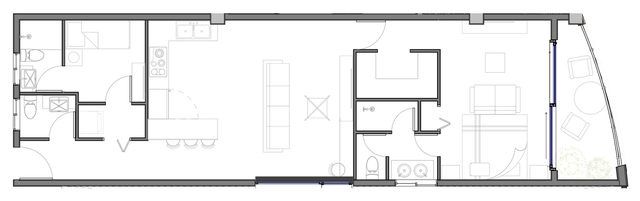
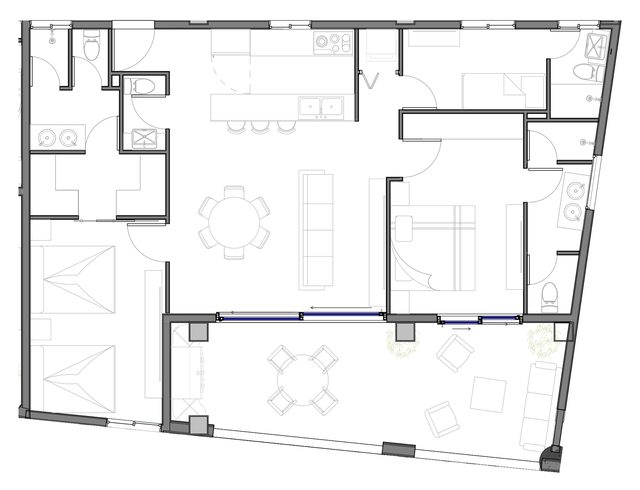
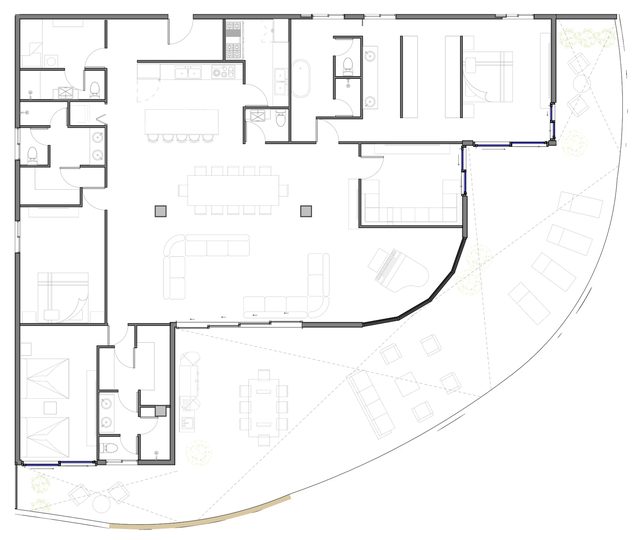
What you can plan for is your own consumption. Belara's residences are delivered with VRF air conditioning, and in a warm climate the number of rooms you cool, the hours you cool them and whether the residence sits closed between stays will shape the electricity bill more than any other habit. Residences range from 1,044 sq ft to 4,575 sq ft, terrace included, so two owners in the same building can face very different bills.
Bottled gas has a price set by the state. In the week of 3 October 2026 the MICM's official price for liquefied petroleum gas (LPG) was RD$135.20 a gallon, about US$2.27 at that week's rate, and like every fuel price it is reset by a weekly notice.
What does a restaurant bill or a supermarket receipt actually add?
Start with the restaurant bill, because it catches most newcomers out. Two charges sit on top of the menu prices, each on its own line: 18% ITBIS, the Dominican value-added tax, and a 10% service charge called the propina legal. That charge is widely documented as compulsory rather than optional, and just as widely reported not to reach the person who served you reliably, which is why leaving something extra in hand is customary. When you compare two restaurants, compare them after both lines.
The supermarket works on a different logic. ITBIS taxes industrialised goods and services, and in a ruling of 7 July 2025 the tax authority (DGII) confirmed that fruit sold in its natural state falls outside it, imported fruit included. Fresh produce therefore carries no ITBIS, while processed and packaged goods generally do. Imported products have usually crossed customs too, where the tariff schedule sets bands from 0% to 20% depending on how a product is classified, with ITBIS at 18% charged on the import as well. A household that shops at the produce counter and buys local brands feels those layers far less than one that fills the trolley with imported packaged goods.
For everyday errands, Green Village's small commercial plaza, with restaurants, a market and a beauty salon, is a short walk from the building.
| Charge | Rate | Where you meet it |
|---|---|---|
| ITBIS | 18% | Restaurant meals, processed and packaged goods (generally), imports |
| Propina legal | 10% | Restaurant bills, as a separate line |
| Customs tariff | 0% to 20% | Imported goods, by tariff classification |
| Fresh food in its natural state | No ITBIS | Fruit and produce, local or imported |
What does it cost to get around from Cap Cana?
Most residents drive, and the distances from Belara are short: Juanillo beach is about a 12-minute drive and Punta Cana International Airport about 20 minutes, both measured from the developer's map pin without traffic. The building has 99 underground parking spaces plus 3 for golf carts, a hint that many trips inside Cap Cana are short enough to need no car at all.
Fuel is the part of motoring with a published price, because the MICM fixes it every week. The table gives the official prices for the week of 3 to 9 October 2026. Treat them as a snapshot: the ministry reissues them every Friday, and premium gasoline had already moved by several pesos a gallon over the previous weeks.
On the licence question, INTRANT, the transport authority, is reported to accept a foreign licence for roughly 90 days in practice; that allowance is not a clause anyone has found in Law 63-17, so confirm it before relying on it and plan for a Dominican licence if you settle. Without a car, ride-hailing apps operate around Punta Cana, though availability at a given hour varies and this page publishes no fares.
| Fuel | Official price per gallon | Approx. in US$ |
|---|---|---|
| Premium gasoline | RD$353.10 | US$5.92 |
| Regular gasoline | RD$317.50 | US$5.32 |
| LPG (bottled gas) | RD$135.20 | US$2.27 |
Which fixed costs come with owning the residence?
Three lines repeat whatever you consume. The first is the condominium fee, which keeps the shared building and its amenities running: at Belara that means a lap pool and jacuzzi, a gym and spa, a private cinema, coworking rooms and a rooftop with a running and yoga track. The fee is set on the residence's area, so it scales with size; ask for the current rate and its billing period in writing before you budget, because the figure we hold has not been confirmed for publication.
The second is property tax. The Dominican IPI is 1% a year, but it applies only to the part of a property's value above an exempt threshold that is revised every year, not to the whole value. Law 158-01, known as CONFOTUR, provides a fifteen-year IPI exemption for qualifying tourism projects, and it also lifts the one-off 3% transfer tax for first buyers from the developer. Belara's CONFOTUR classification is planned, not yet granted, and how any exemption applies to a particular unit and owner is a question for your attorney.
The third is cover: insurance for the residence's contents and health insurance for yourself. We hold no sourced premium for either, so none is quoted. Canada's foreign ministry warns that across most of the country ambulances are unreliable, while they are more reliable and available in major cities and tourist areas, Punta Cana among them, which makes the choice of plan, and the hospitals it opens, worth settling before you arrive. Internet is a smaller line: Ookla's national medians for August 2026 put fixed broadband at about 74 Mbps down and 42 Mbps up, while plans and prices vary by provider.
Common questions
- Is Punta Cana an expensive place to live?
- It depends less on the place than on the household. Fresh produce carries no ITBIS and local brands avoid import duties, while imported packaged goods, restaurant meals with 18% ITBIS and a 10% propina legal, and heavy air-conditioning use are where budgets grow. Most daily costs are in pesos, so the exchange rate matters too.
- Who supplies electricity and water at Belara?
- Belara is inside Cap Cana, which runs its own isolated electricity system through Cenetur rather than drawing on the region's utilities, and whose water is managed by ACUATUR. Neither tariff is published here; confirm the supply contract when the residence is handed over in Q4 2029.
- How much does gasoline cost in the Dominican Republic?
- The state sets it weekly. For the week of 3 to 9 October 2026 the MICM's official price was RD$353.10 a gallon for premium and RD$317.50 for regular, about US$5.92 and US$5.32 at the notice's rate of RD$59.69 to the dollar. Check the current notice before budgeting.
- Why is a restaurant bill higher than the menu prices add up to?
- Because two charges are added as separate lines: 18% ITBIS and the 10% propina legal, a service charge widely documented as compulsory. It is often reported not to reach the server reliably, so many diners also leave something in hand.
- Will I pay property tax on a residence at Belara?
- The IPI is 1% a year on the portion of a property's value above an exempt threshold revised annually. CONFOTUR provides a fifteen-year IPI exemption for qualifying projects, but Belara's classification is planned, not granted, so ask your attorney how it would apply to your unit.
Want the details for your own situation?
Ask about availability, layouts or the buying process, and someone from the sales team will get back to you.
Get in touch