Investing in the Dominican Republic: what the law says, what the data says, and what one building projects
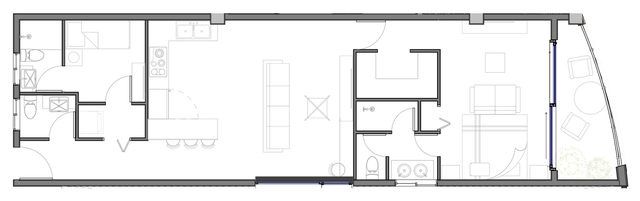
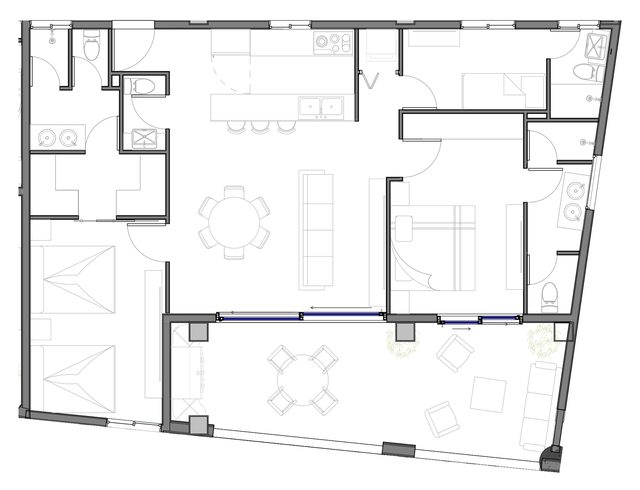
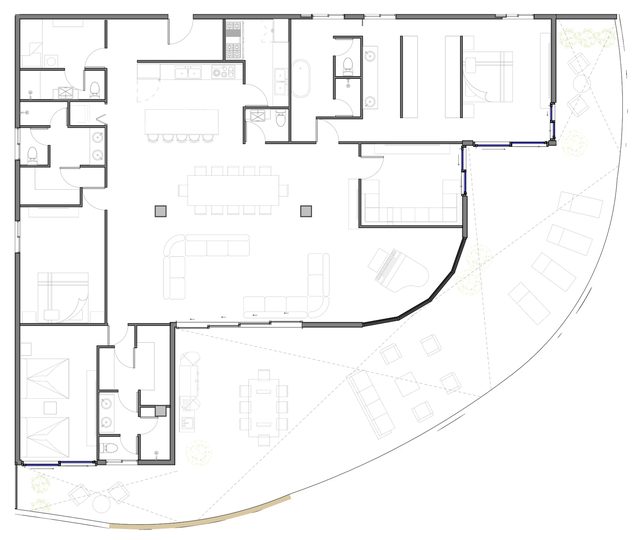
Before anyone invests in the Dominican Republic three different questions need answering, and they are often blurred together: what the law allows a foreigner to do, what the economy has recently done, and what a particular property is projected to earn. This page takes them in that order and keeps them apart. The property is Belara, 59 residences in Green Village inside Cap Cana, priced from US$318,701 with delivery planned for Q4 2029, and its numbers are the developer's projections, not guarantees.
What Dominican law promises a foreign investor
The Dominican Foreign Investment Law, Ley 16-95, promulgated in November 1995 and amended in 2003, is short and worth reading in the original. Article 3 lists the destinations foreign investment may take, and real property located in the Dominican Republic is one of them. Article 6 puts foreign investors on the same footing as national ones, with the same rights and obligations, save the exceptions that law or special laws make. Separately, nothing in Dominican law stops a foreigner from taking title to a home personally, and the old requirement of prior presidential approval was abolished by decree in 1998.
One article needs reading with care. Article 7 lets investors remit abroad, in convertible currency and without prior authorisation, the capital invested and the dividends declared, after income tax. But the investments it refers to are those defined in Article 1, which describes contributions to the capital of a company operating in the country, registered with the export and investment centre CEI-RD. The text does not say how that applies to a person who buys a residence directly, in their own name. That is a question to put to a Dominican attorney before you structure a purchase, not one this page answers.
What the latest published readings of the economy show
Economic figures age quickly, so each one here carries its publisher and its period. The World Bank's Macro Poverty Outlook of April 2026 records average growth of 5.2% over the two decades to 2025 and calls the country one of the fastest-growing economies in Latin America. The Banco Central's preliminary results for 2025 alone show real growth of 2.1%, a slowdown the bank attributes to global uncertainty and tighter financial conditions.
On investment, the Banco Central's preliminary figures put foreign direct investment in 2025 at US$5.03 billion, a record on those figures, of which real estate took 15.7% of the inflow. The Ministry of Tourism counted 11,676,901 visitors in 2025. None of these is a forecast, none describes any single building, and none is a reason to expect a property to appreciate. They describe the setting, not the investment.

Where Punta Cana fits in that picture
For a property in the east of the island, the relevant figure is how visitors arrive. The Banco Central's tourist-flow report for 2025 counts 5,275,492 foreign non-resident arrivals through Punta Cana International Airport, 71.9% of the national total. Route aggregators listed about 90 non-stop destinations from that airport when this page was written, a schedule count that changes every season.
Belara sits inside Cap Cana, in the planned residential community of Green Village, about a 20-minute drive from that airport and a 12-minute drive from Juanillo beach, both measured from the developer's own map pin without traffic. It is not a beachfront building, and it is not presented as one: its setting is a community with a central park that the building opens onto directly, which is a different product from a hotel strip, for a buyer and for a guest.
What a Belara residence is as an investment, and what it is not
Belara has 59 residences, priced from US$318,701, with delivery planned for Q4 2029. That date is the first thing an investor should price in: capital committed today earns nothing from rentals until the building is delivered and furnished, and residences are delivered with appliances and air conditioning but without furniture.
The developer's own projection shows a net return of 8.3-8.4% for its two modelled residences. It assumes 70% occupancy, deducts a 20% management fee, operating costs, association fees and insurance, and a furniture-replacement reserve, and it shows property tax at zero because it assumes a CONFOTUR classification that is planned, not yet granted. Rentals carry a 3-night minimum. Read every part of that as an assumption to test: if occupancy is lower, or the classification is not obtained, the net figure moves. It is a projection, not a guaranteed return.
The taxes that sit between gross and net
Two Dominican taxes decide how much of a rental's gross reaches the owner. Short-term tourist accommodation is subject to ITBIS at 18%, and it is the owner hosting the stay who answers for it, not whichever website took the booking. And an owner who is not tax-resident has rental income withheld at 27% of gross, with no deductions, as a single and final payment. Rates change, so confirm both with a Dominican accountant before relying on any net figure, including ours.
CONFOTUR, the tourism-incentive regime of Law 158-01, lists two exemptions for qualifying projects: the 3% transfer tax on the first purchase from the developer, and the 1% annual property tax on value above an exempt threshold, with the law setting a 15-year exemption period for qualifying projects. Rental income is assessed under its own rules. At Belara the classification is planned by the developer and not yet granted, so how any of it would apply to a given unit and owner is a question for your attorney once it is.
Common questions
- Can a foreigner invest in Dominican real estate?
- Yes. Ley 16-95 lists real property among the permitted destinations of foreign investment, and a foreign national can hold Dominican real estate in their own name on the same terms as a Dominican.
- Is Belara's 8.3-8.4% a guaranteed return?
- No. It is the developer's projection, assuming 70% occupancy, a 20% management fee and a CONFOTUR classification that is planned but not granted. Actual results depend on occupancy, costs and taxes.
- How is rental income taxed for a non-resident owner?
- Short-term stays carry ITBIS at 18%, owed by the host, and a non-resident's rental income is withheld at 27% of gross with no deductions. Rates change, so confirm them with a Dominican accountant.
Want the details for your own situation?
Ask about availability, layouts or the buying process, and someone from the sales team will get back to you.
Get in touch