Reading CONFOTUR Law as a Process, Not a Label — and Where Belara Stands
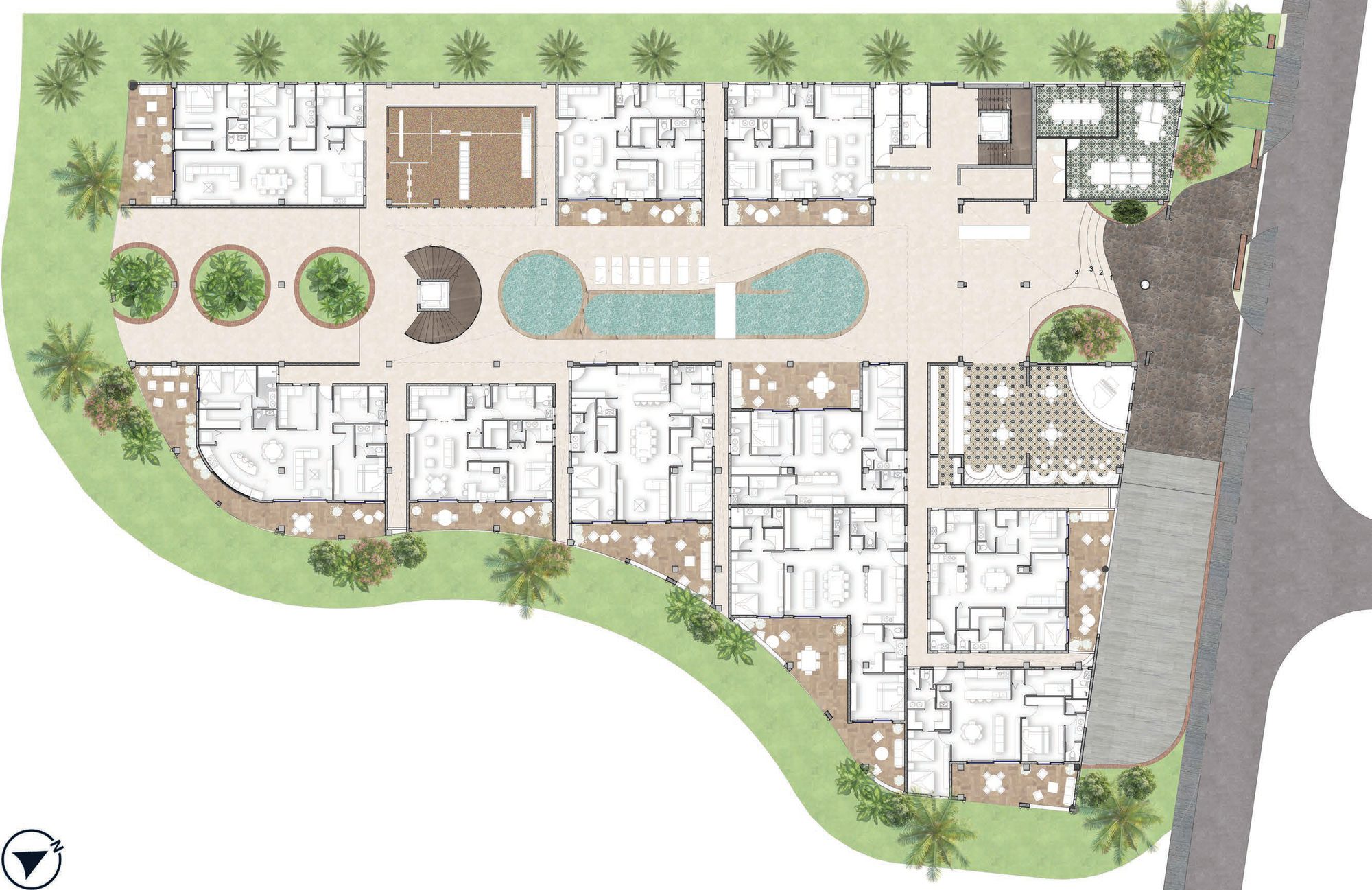
CONFOTUR is usually described in a single sentence: buyers in qualifying projects skip the 3% transfer tax and the 1% annual property tax. That sentence is true, but it hides the part a buyer most needs to understand — that CONFOTUR benefits attach to a project only after a government council has classified it, by resolution, in stages. Law 158-01 is a procedure before it is a perk. This guide explains that procedure, what each stage certifies, how anyone can check a project's status, and exactly where Belara, a building of 59 residences in Green Village, Cap Cana, stands in it today.
Who Law 158-01 is really written for
Law 158-01, the statute that promotes tourism development, was enacted in 2001 and amended in 2013 by Law 195-13. Read in full, most of it is addressed to the business building and operating a tourism project, not to the person buying a home in it. The Ministry of Tourism's own summary of the benefits lists an exclusion from income tax for those who invest in the activities the law regulates, relief from import duties and ITBIS on the machinery, equipment and materials needed to build and first equip the project, relief from fees on its plans and studies, and no withholding on its financing. Those are the developer's incentives, and a condo buyer does not receive them.
Two provisions reach the buyer. A first buyer from the developer of a classified project is exempt from the 3% transfer tax on the purchase, and from the 1% annual property tax, the IPI — a tax that, outside CONFOTUR, falls only on the part of a property's value exceeding a threshold revised every year. Resale buyers are excluded, and the ministry states that the incentives apply to newly built projects. Everything else in the law is context for how a project earns the right to pass those two benefits on.
Two resolutions: how a project becomes classified
A project does not qualify by describing itself as CONFOTUR. It qualifies when the Consejo de Fomento Turístico approves it, by resolution, as eligible for the law's benefits. The ministry names two stages: a provisional classification and a definitive one. Applications are made only through the ministry's online portal, and every document and plan must be in Spanish.
The difference between the stages is what they require. The provisional application rests on a preliminary architectural design, a pre-feasibility analysis, proof of the right to the land, the Ministry of Tourism's no-objection and evidence that permits have been applied for. The definitive application asks for what the provisional one only anticipated: the full architectural project, a current environmental authorisation, the approvals of the competent municipal and state bodies, the ministry's land-use no-objection resolution, a full feasibility analysis, and the number and date of the provisional resolution if there was one. In plain terms, a definitive classification certifies that the approvals are in place; a provisional one certifies that the project looks eligible on paper.
Where Belara stands, stated precisely
Belara's developer plans CONFOTUR classification for the project. It has not been granted, and this site does not describe it as granted or as in process. The only approval document for Belara is the Cap Cana planning council's conceptual approval of May 2026, which is expressly conditional and states that it does not replace government approvals. It is a real and useful step inside Cap Cana, but it is not a CONFOTUR resolution of either kind.
That matters for one number in particular. The developer's return projection shown on this site — 8.3–8.4% net at an assumed 70% occupancy — treats property tax as zero because it assumes the planned exemption. If classification were not obtained, that line of the projection would change. The projection is a projection in any case, not a guarantee; the point here is simply to know which of its assumptions depends on a decision the council has not yet made.
When the exemption would run, and why it is not automatic
The law provides a fifteen-year exemption period for qualifying projects, counted from the completion of construction under Article 7. Belara's delivery is planned for Q4 2029, so for this building that clock could not begin before then, and only if the project is classified. How the period applies to a particular residence and owner is a question for your attorney rather than something this page can state for your title.
Nor does the exemption apply itself. It must be filed and recorded on the title; a buyer in a classified project who never completes that step has a benefit on paper only. And because the IPI exemption is a property-tax exemption, it is separate from how rental income is taxed. A non-resident owner's rental income is subject to a 27% withholding on the gross amount, with no deductions, and short-term stays carry 18% ITBIS, which is owed by the owner hosting the guest rather than by the booking site. Rates change; confirm them before relying on them, and take the interaction between the two to your attorney.
Checking a project's CONFOTUR status yourself
None of this requires taking a developer's word, including ours. The ministry publishes the means to check, and the questions are short.
-
Use the ministry's public lookup The CONFOTUR portal has a consultation page listing classifications granted to tourism projects, filterable by stage (provisional or definitive), by status (approved, rejected or postponed) and by province. Belara is in La Altagracia.
-
Ask for the resolution, not the adjective A classified project has a resolution with a number and a date. Ask which stage it is, and read it. 'CONFOTUR project' in a brochure is not a document.
-
Confirm you are a first buyer The buyer-side exemptions are for first buyers from the developer. A resale purchase in the same building does not carry them.
-
Have your attorney file and record it The exemption must be filed and recorded on the title. Ask your attorney to confirm how and when that will happen for your residence.
Common questions
- Is Belara CONFOTUR-approved?
- Not yet. The developer plans CONFOTUR classification for Belara, but no CONFOTUR resolution has been granted. The only approval document so far is Cap Cana's planning council's conceptual, conditional approval of May 2026, which is not a CONFOTUR classification. You can check the status of any project yourself on the Ministry of Tourism's CONFOTUR lookup.
- What is the difference between a provisional and a definitive classification?
- Both are resolutions of the Consejo de Fomento Turístico approving a project as eligible for Law 158-01's benefits. The provisional stage rests on a preliminary design and a pre-feasibility study; the definitive stage requires the full project plus environmental, municipal and land-use approvals, and cites the provisional resolution if there was one. A definitive classification tells you the approvals are in place.
- Would the CONFOTUR exemption pass to someone who later buys my residence?
- No. The buyer-side benefits are for first buyers from the developer, and resale purchases are excluded.
- Does Law 158-01 give buyers an income-tax exemption?
- The income-tax and import incentives in the law are addressed to the enterprise building and operating the project. What reaches a first buyer in a classified project is the exemption from the 3% transfer tax and from the 1% IPI. How rental income is taxed is a separate matter under its own rules, and a question for your attorney.
Want the details for your own situation?
Ask about availability, layouts or the buying process, and someone from the sales team will get back to you.
Get in touch