Sand at the Door or a Park at the Door? Weighing Beachfront Against Belara's Address
Belara is not a beachfront building, and it would be odd for a page on its own site to pretend otherwise. Its 59 residences sit around a central atrium in Green Village, inside Cap Cana, and open directly onto the neighbourhood's central park; Juanillo beach is a 12-minute drive away. Many buyers searching for beachfront property in the Dominican Republic end up weighing exactly that trade — the sea at the end of the path, or a park at the door and the sea a short drive off. This guide sets out what beachfront can legally mean here, what it does and does not change, and how to weigh it honestly against an address like Belara's.
What 'beachfront' can mean in Dominican law
The starting point is a statute most listings never mention. Ley 305 of 1968 places the coastal strip along the whole Dominican shoreline in public ownership — roughly the first 200 feet measured inland from the high-tide line. That strip cannot be sold, cannot be fenced off as private land and cannot be acquired by long use. The same public treatment reaches the margins of rivers, lakes and lagoons, so waterfront of any kind meets the same line.
So when a listing says beachfront, it is describing how close a private parcel sits to that public line and what arrangements exist for the ground in between — not ownership of the beach. Land behind the strip can be private, which is how a resort can lawfully control the walkway, the parking and the loungers while the sand itself remains public. And where a building does stand on the strip, it stands there under a specific authorisation from the Executive, granted exceptionally for tourism or public-utility purposes, which belongs to whoever holds it.
The address Belara chose instead
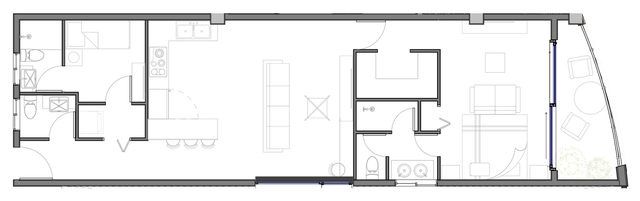
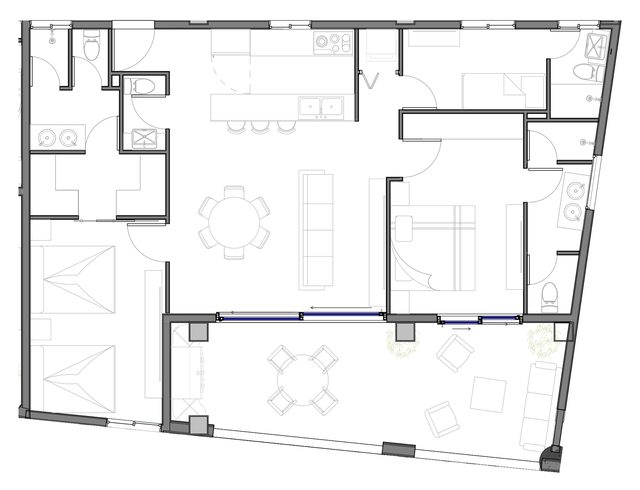
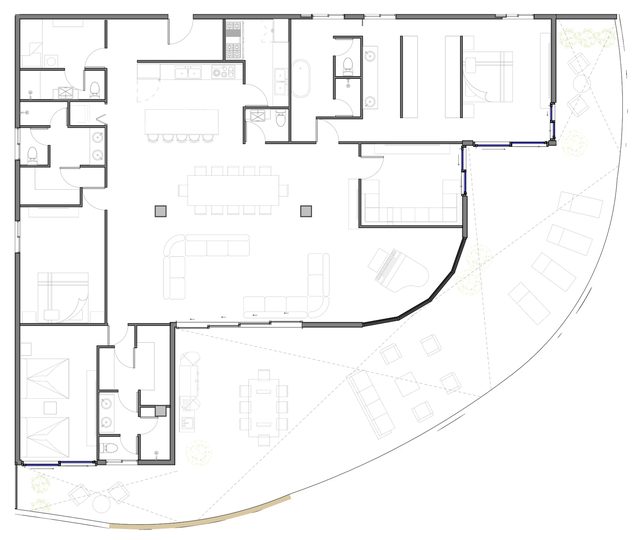
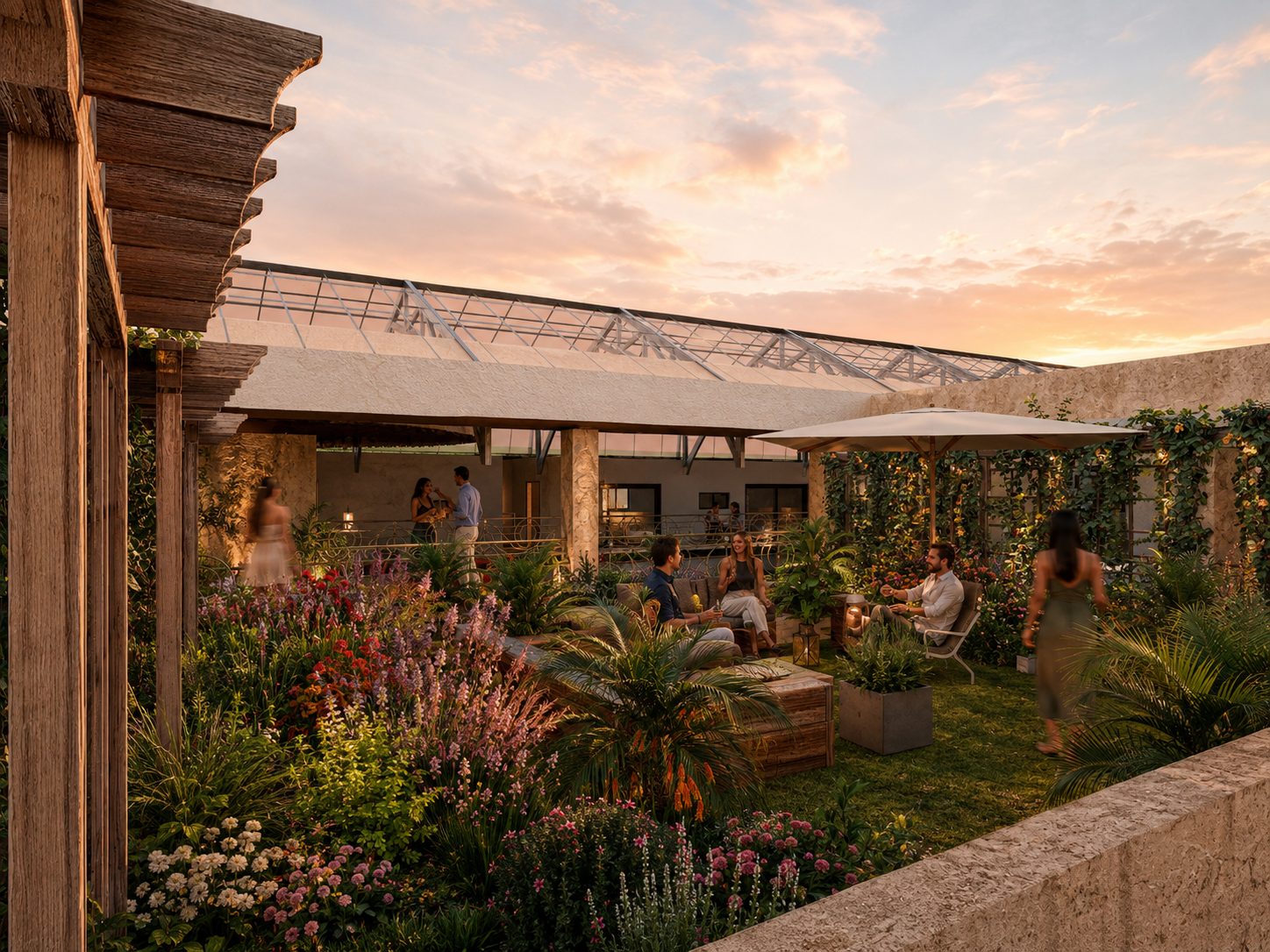
Belara faces inward and onto green space. Its layout is built around a central atrium that brings daylight, cross-breezes and planting into the middle of the building and opens straight onto Green Village's central park, the shared heart of a planned residential community inside Cap Cana. A commercial plaza with restaurants, a market and a beauty salon is steps away. Inside, amenities are spread across 5 levels: a lap pool and jacuzzi on the ground level, a gym and spa above, and on the roof a running and yoga track, a barbecue area and a sky garden.
Juanillo beach, inside Cap Cana, is a 12-minute drive from the developer's own map pin, and Punta Cana International Airport a 20-minute drive — both free-flow estimates that leave out traffic and gate time. Residences run from a one-bedroom of 1,044 sq ft to a three-bedroom penthouse of 4,575 sq ft, terrace included, from $318,701, with delivery planned for Q4 2029.
Shoreline or park: the trade, set out plainly
Neither address is better in the abstract. They buy different things, and the table puts the differences next to each other. It compares kinds of address, not particular developments, and makes no claim about which rents better, because nothing published here measures that.
| Question | A shoreline address | Belara's park-front address |
|---|---|---|
| What is directly in front of the building | The public shoreline strip, and whatever an operator is authorised to run on it | Green Village's central park, reached directly from the atrium |
| Getting to the sea | On foot, subject to how the land behind the strip is arranged | A 12-minute drive to Juanillo beach inside Cap Cana |
| What you own | A share of land that stops where the public strip begins | The same kind of title, on land that does not meet the shore |
| Storm season | The same Atlantic season and the same national wind-load requirement | The same Atlantic season and the same national wind-load requirement |
| Daily outdoor space | The beach and any facility on it, on the operator's terms | A community park, plus a lap pool and rooftop sky garden inside the building |
Reading 'private beach' and 'Blue Flag' in a listing
Two phrases carry more weight in coastal marketing than they can bear. A private beach does not exist as a legal object here: what the phrase describes is a staffed, furnished and cleaned stretch run by a hotel or club, often on public ground under an authorised use, with access controlled through the private land behind it. The question worth asking is whose arrangement it is and whether your purchase documents give you any right to use it.
Blue Flag certification does operate in the Dominican Republic, through a national operator, and it has included stretches on the Punta Cana coast. But it attaches to a single managed stretch — usually one run by a particular hotel or club — and is renewed season by season, so the neighbouring section of the same named beach may hold none. Treat it as a fact about an operator in a given season, not a permanent property of a place. Its criteria include lifeguard cover, periodic water testing and accessibility provision, which is useful to know when you are choosing where to swim, wherever you live.
What does not change with distance from the water
Some risks are shared by every address on this coast. The Atlantic hurricane season runs from the start of June to the end of November, and it is the same season whether a residence is on the sand or a short drive inland. The national building code made official in 2026 requires every structure, and its cladding and anchorages, to be designed for minimum wind loads. That requirement exists; this page does not attach a wind speed or a storm category to Belara or to any building, because no such figure is sourced here.
What distance does change is day-to-day: how often you are on the beach, what you look at from the terrace, how you use outdoor space on the days you are not swimming. That is a question of how you intend to live in the home, and it is worth answering before you look at floor plans.
Common questions
- Is Belara beachfront?
- No. Belara's 59 residences sit around a central atrium in Green Village, inside Cap Cana, with direct access to the community's central park. Juanillo beach is a 12-minute drive from the developer's map pin, as a free-flow estimate without traffic or gate time.
- Can a foreigner buy beachfront property in the Dominican Republic?
- Yes. Foreign buyers take registered title in their own names exactly as Dominicans do, and no government approval is needed first. What nobody of any nationality can buy is the shoreline strip itself, which Ley 305 of 1968 keeps public. Every private parcel on the coast begins behind it.
- Are there private beaches in the Dominican Republic?
- Not as owned property. The sand along the coast is public. A 'private beach' in a listing is a managed stretch run by a hotel or club, sometimes on public ground under an authorised use, with access controlled through the land behind it. Ask whose arrangement it is and what your own documents say about using it.
- Does a home set back from the sea avoid hurricane season?
- No. The Atlantic hurricane season, from the start of June to the end of November, applies to the whole coast, and the national building code's wind-load requirement applies to every structure. Distance from the water changes how you live day to day, not which season you live through.
Want the details for your own situation?
Ask about availability, layouts or the buying process, and someone from the sales team will get back to you.
Get in touch